Best disc golf putters

The putter is the disc you will throw more than any other, and the one where a consistent feel matters most. A good putter flies predictably on a soft stroke, sits comfortably in your hand, and holds its line in a breeze. This guide explains the specs that decide putter feel — stability, bead, plastic, rim and flight numbers — so you can find one your hand trusts, then points you to the picks once they are verified.
A note on how to read this. Putter choice is more personal than any other disc, because so much of it is feel off the fingers. So the value here is the framework — what each spec changes — so you can shortlist a few putters that match your hand and your stroke, then compare them. Read the framework first, then look at the picks.
How to choose a putter
Five things decide whether a putter suits you. Run any putter through these — they are exactly the columns in the comparison below.
Stability — stable to slightly overstable for putting
Stability is how the putter flies for your arm. For putting, most players want a stable to slightly overstable putter so it holds its line on a gentle stroke and resists wind. For throwing approaches, an overstable putter is more reliable and an understable one can be shaped. Beginners are usually best with a stable putter that does one job predictably. The discs hub decodes the flight-number system if it is new to you.
Bead — a feel preference, not a quality marker
The bead is a small ridge on the bottom outer edge of the rim. A beaded putter can feel a touch more overstable and give some players a more repeatable release; a beadless putter often feels smoother coming off the fingers. Neither flies "better" — it is purely what your hand prefers. If you can hold both, do, because the bead is one of the first things a hand reacts to.
Plastic — grip over durability
On a putter, a consistent grip matters more than maximum durability, so a grippier base or dedicated putter-line plastic is the common choice for putting. Premium plastics last longer and suit putters you throw as approaches, where a firmer feel helps. Pick grip for your putting putter and durability for your throwing putter, if you carry both.
Rim feel — comfort you will notice every hole
Rim depth and shape decide how the putter sits across your fingers. A deeper rim fills the hand and suits a power grip; a shallower rim feels nimble for putting. There is no universally right rim — only the one that feels natural to you. Because you throw the putter constantly, a rim you dislike is a putter you will quietly stop trusting.
Flight numbers — low and slow
Putters sit at the low end of every scale: speed around 2 to 3, modest glide, turn near 0, and low to moderate fade. A putter with near-zero turn and a fade of 1 to 2 holds a putting line well. Higher glide can carry an approach further but makes a putt a touch harder to control. Read the four numbers and you will know how a putter behaves before you throw it.
The putters compared
A short list of widely available putters, compared on the five specs above. Specs are verified against manufacturer flight numbers and current Amazon listings — no hands-on testing claims, just the numbers and the feel notes that decide the fit.
| Best for | Stability | Bead | Plastic | Rim feel | Flight numbers |
|---|---|---|---|---|---|
| Best overall putter | Stable | Beaded | Prime | Shallow, beaded rim with excellent grip in wet and dry conditions | 2 / 4 / 0 / 1 |
| Best for beginners | Stable | Beadless | DX | Shallow beadless rim; DX plastic is slightly flexible and grippy | 2 / 3 / 0 / 1 |
| Best for approach / throwing | Overstable | Beadless | ESP | Low-profile beadless rim; ESP plastic offers consistent tackiness | 4 / 3 / 0 / 3 |
| Best straight putter | Understable / straight-flying | Beadless | Zero Medium | Slim, low-profile beadless rim with soft, grippy Zero Medium plastic | 3 / 3 / -1 / 1 |
| Best premium feel | Stable | Beadless | ESP | Shallow, beadless rim with firm yet tacky ESP plastic feel | 3 / 3 / 0 / 3 |
Our top picks
Best overall putter: Dynamic Discs Prime Judge Putter Golf Disc [Colors May Vary] - 170-176g

Best overall putter
Dynamic Discs Prime Judge Putter Golf Disc [Colors May Vary] - 170-176g
Dynamic Discs
- Stability: Stable
- Bead: Beaded
- Plastic: Prime
- Rim feel: Shallow, beaded rim with excellent grip in wet and dry conditions
- Flight numbers: 2 / 4 / 0 / 1
- Best for: All skill levels — consistent, predictable flight from tee to green
The Judge has been one of the best-selling disc golf putters since winning Disc of the Year in 2013. Its stable, predictable flight and comfortable beaded rim make it equally effective off the tee, on approach, and on the putting green.
Last checked 2026-05-21
Best for beginners: Innova DX Aviar Putt and Approach Disc Golf Putter 173-175g

Best for beginners
Innova DX Aviar Putt and Approach Disc Golf Putter 173-175g
Innova
- Stability: Stable
- Bead: Beadless
- Plastic: DX
- Rim feel: Shallow beadless rim; DX plastic is slightly flexible and grippy
- Flight numbers: 2 / 3 / 0 / 1
- Best for: Complete beginners — the most proven beginner putter in disc golf history
The Aviar has been used to win more World Championship titles than any other putter and remains a top choice for new players. Its straight, forgiving flight and grippy DX plastic make it easy to learn with and hard to outgrow.
Last checked 2026-05-21
Best for approach / throwing: Discraft ESP Zone

Best for approach / throwing
Discraft ESP Zone
Discraft
- Stability: Overstable
- Bead: Beadless
- Plastic: ESP
- Rim feel: Low-profile beadless rim; ESP plastic offers consistent tackiness
- Flight numbers: 4 / 3 / 0 / 3
- Best for: Forehand upshots, skip shots, and windy approach situations
The Zone is the go-to overstable approach disc in disc golf, trusted for forehand upshots and reliable skip shots into a headwind. Its low-profile ESP plastic construction resists flipping even on hard throws.
Last checked 2026-05-21
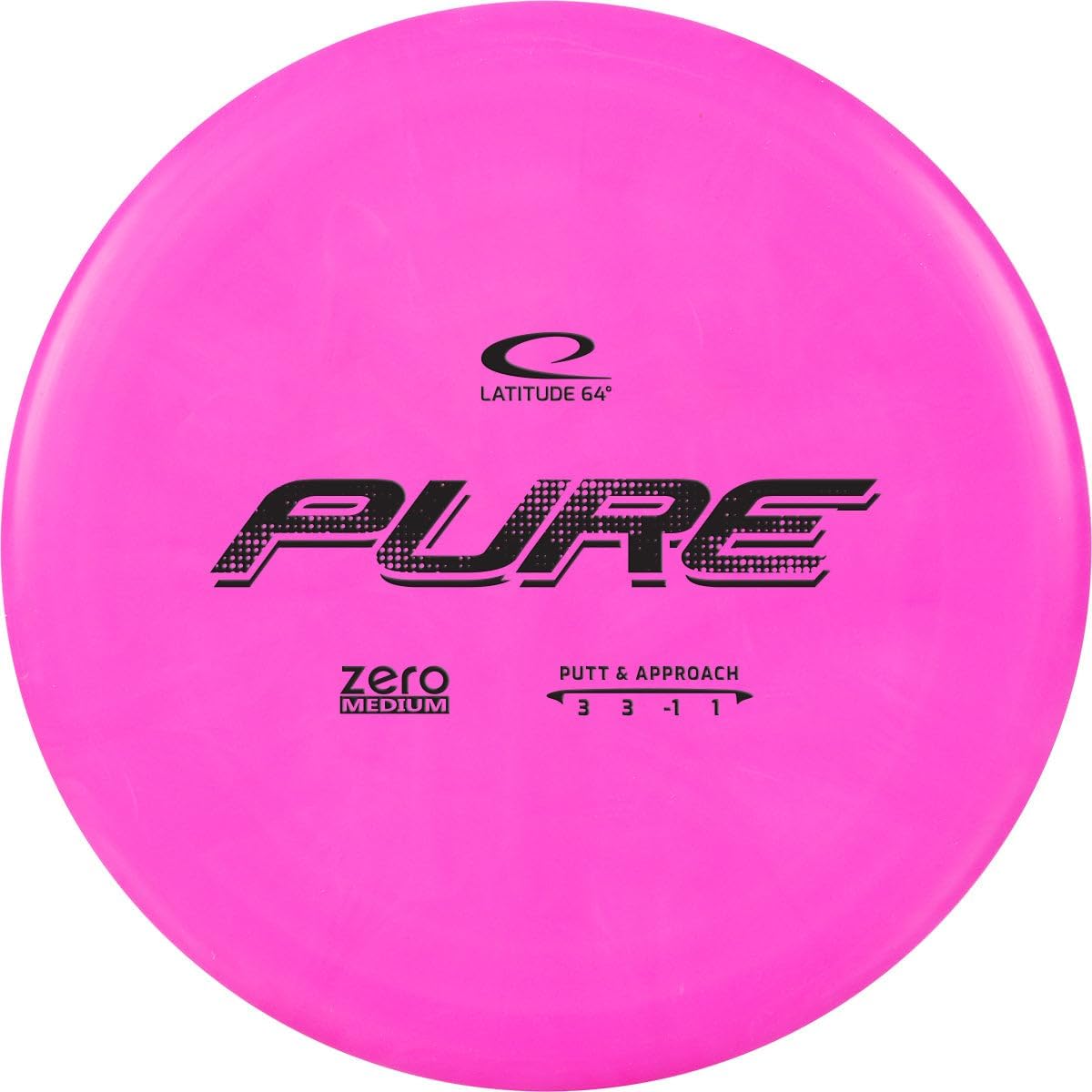
Best straight putter: Latitude 64 Zero Medium Pure Disc Golf Putter | Straight-Flying Putter with Minimal Fade | Soft & Grippy Zero Medium Plastic | Reliable Control for All Skill Levels | 170-176g
Best straight putter
Latitude 64 Zero Medium Pure Disc Golf Putter | Straight-Flying Putter with Minimal Fade | Soft & Grippy Zero Medium Plastic | Reliable Control for All Skill Levels | 170-176g
Latitude 64
- Stability: Understable / straight-flying
- Bead: Beadless
- Plastic: Zero Medium
- Rim feel: Slim, low-profile beadless rim with soft, grippy Zero Medium plastic
- Flight numbers: 3 / 3 / -1 / 1
- Best for: Players wanting a straight-flying, forgiving putter with minimal fade
The Pure's slight understable flight (Turn: -1) makes it one of the straightest-finishing putters available. The slim beadless rim and soft Zero Medium plastic suit players who prefer a clean, natural grip.
Last checked 2026-05-21
Best premium feel: Discraft Paul McBeth Luna 2022 Tour Series (ESP) Putter & Approach Golf Disc, Colors May Vary, 173-174 Grams

Best premium feel
Discraft Paul McBeth Luna 2022 Tour Series (ESP) Putter & Approach Golf Disc, Colors May Vary, 173-174 Grams
Discraft
- Stability: Stable
- Bead: Beadless
- Plastic: ESP
- Rim feel: Shallow, beadless rim with firm yet tacky ESP plastic feel
- Flight numbers: 3 / 3 / 0 / 3
- Best for: Players wanting a premium-feel putter with reliable fade — Paul McBeth's tour disc
The Luna is Paul McBeth's primary putter and one of the best-selling signature putters in disc golf. ESP plastic delivers a firm, confident feel at release with a reliable fade finish on every throw.
Last checked 2026-05-21
Who should buy what
Brand-new players
One stable putter in a grippy plastic does everything you need — putting and short approaches — while you learn. Do not overthink it. Comfort and a predictable flight beat any clever feature. You can add a second, firmer putter for throwing later.
Players building a putting routine
Once you putt regularly, consider buying two or three identical copies of the putter you settle on, so a lost or worn putter swaps in without changing your stroke. This is why putters are the most repeat-bought disc in the sport — and why a putter you trust is worth stocking deep.
Slower arms and windy courses
A slower arm may prefer a slightly lighter putter for throwing approaches, while a heavier, slightly overstable putter holds steadier in wind for putting. If your local course is consistently breezy, lean toward a stable-to-overstable putter that resists the gust.
Where the putter fits in your bag
A putter is one of your first three discs, alongside a midrange and a fairway driver. If you are still assembling that core, the most efficient buy is a matched starter set rather than three discs bought separately: see the best disc golf disc set guide for how a putter, midrange and driver are chosen to work together for a beginner arm. And if you want to drill putting at home, a practice basket is the upgrade that helps your score most.
Frequently asked questions
What makes a good beginner putter?
A stable-to-slightly-overstable putter with a comfortable rim and a grippy base plastic. You want a putter that flies predictably and does not turn over on a soft putting stroke, which is why a touch of stability helps. Comfort in the hand matters more than any single flight number, because you will throw this disc more than any other.
What does the bead on a putter do?
The bead is a small ridge on the bottom edge of the rim. A beaded putter gives some players a more consistent release point and feels a little more overstable; a beadless putter often feels smoother off the fingers. Neither is better — it is a feel preference. Try both if you can, since the right one is the one your hand likes.
Should a putter be overstable or understable?
For putting, most players want a stable to slightly overstable putter, so it holds its line on a gentle stroke and resists wind. For throwing approaches, a more overstable putter is reliable, while a more understable putter can be turned over for shaped shots. Beginners are usually best with a stable putter that does one job predictably.
What plastic is best for putters?
A grippier base or putter-line plastic is the common choice, because grip and a consistent feel matter more on a putter than maximum durability. Premium plastics exist for putters and last longer, but many players prefer the softer, tackier feel of a dedicated putter plastic for the putting stroke. Throwing putters can benefit from a firmer premium plastic.
Can I use one putter for putting and approaches?
Yes, and many beginners do. A single stable putter handles both jobs well to start. As you progress, players often carry two: a soft, grippy putter for putting and a firmer, more overstable copy for throwing approaches. There is no need to split them early — one good putter is plenty at first.
Why do players carry so many putters?
Putters are repeat-purchase-heavy because feel is personal and a putter you trust is worth replacing exactly. Serious players often stock several identical copies so a lost or worn putter can be swapped without changing their stroke. It is also the disc thrown most, so it wears fastest. Starting out, one or two is plenty.
What weight should a putter be?
Most players putt with a heavier putter, often in the 170 to 175 gram range, because the extra weight resists wind and gives a steady, consistent feel on the putting stroke. Lighter putters can suit slower arms for throwing approaches. For putting specifically, heavier is the common preference once you settle on a mould.