Disc golf for beginners: the complete starter guide
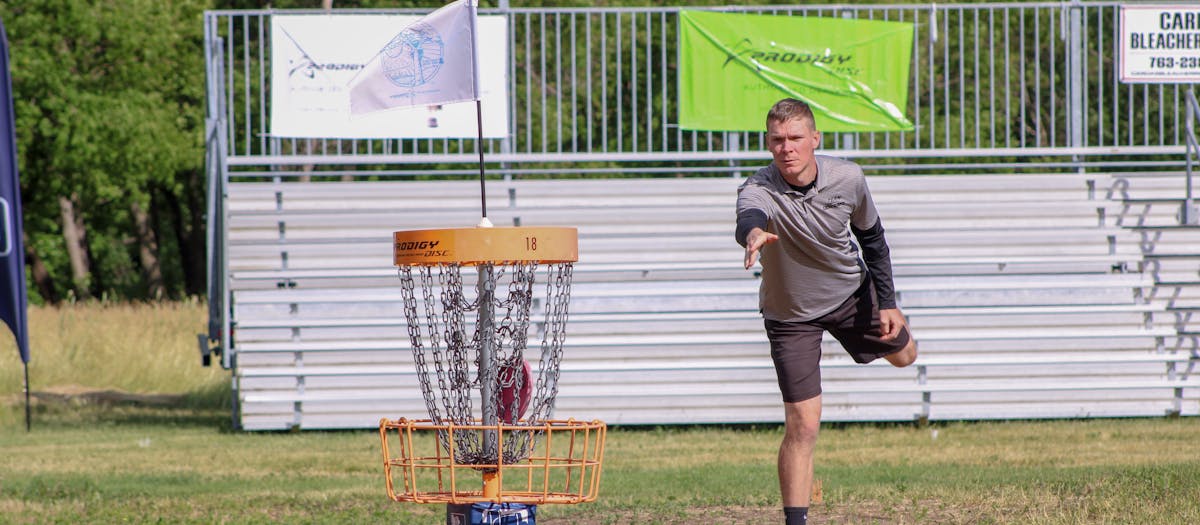
Disc golf is the easiest cheap way into an outdoor sport. You throw a disc from a tee, walk to where it lands, throw again, and keep going until it parks in a metal basket — fewest throws wins, exactly like ball golf. Most courses are free, you can start with three discs that cost less than a single round of regular golf, and the learning curve is gentle enough that you can enjoy your first round without knowing a thing. This guide walks every beginner decision in the order that actually matters.
A quick vocabulary note before we go further. You will hear the sport called both disc golf and frisbee golf. They are the same game. "Disc golf" is the term the sport itself uses (the governing body is the PDGA — the Professional Disc Golf Association), and it is what most courses, leagues and manufacturers say. Golf discs are smaller, denser and sharper-edged than the soft recreational frisbee you throw at the beach, which is why they fly so much further.
One promise up front: no hype here, and nothing gets called easy. Every throw is hard for someone, flight numbers are a real learning curve, and you do not need half the gear the internet will try to sell you. If you came for a specific question, jump to the section that applies from the cards throughout this page. If you are at the planning stage, read top to bottom.
Your first three discs
Here is the single most useful thing a beginner can learn: you only need three discs to start, and three discs you throw well will beat a bag of fourteen you barely understand. The three are a putter, a midrange and a fairway driver, and almost every starter set is sold in exactly that combination. Each one covers a band of distance.
- Putter — for putting and short throws. The slowest, most controllable disc. You throw it into the basket from close range and use it for short, accurate shots. It is the disc you will throw more than any other, which is why a putter you trust matters most.
- Midrange — for the middle of the hole. A bit faster and longer than a putter, with a flat, predictable flight. Most beginners are surprised how often a midrange is the right club.
- Fairway driver — for distance off the tee. Faster and longer again, but still controllable for a beginner arm. This is as much speed as a new player needs.
What you do not need yet is a high-speed distance driver — the wide-rimmed discs pros bomb 400 feet. Those need a fast, well-timed throw to fly correctly. Thrown by a beginner arm, a high-speed driver just hooks hard to the left and lands shorter than a fairway driver would. Skip it for a few months. The starter-set guide breaks down exactly which three discs to look for and why.
Flight numbers in plain English
Pick up a golf disc and you will usually find four numbers stamped on it, like 9 | 5 | -1 | 2. This is the flight-number system, and it is the most useful thing to understand in the whole sport — yet it is the thing manufacturer FAQs and retailer pages explain worst. The four numbers, in order, are speed, glide, turn and fade. Here is what each one actually means, written for a right-handed backhand throw (the most common throw, and the one the numbers assume).
Speed (the first number, 1 to 14)
Speed is how fast you have to throw the disc for it to fly the way it is designed to. It is not how fast the disc travels or how far it goes. A high-speed disc has a wide, sharp rim that cuts through the air, but it only flies right if you throw it fast enough. A low-speed disc is forgiving at slower arm speeds. Putters sit around speed 2 to 3, midranges around 4 to 5, fairway drivers around 6 to 9, and distance drivers 10 and up. Beginners should stay at the lower end — a speed-12 driver thrown by a slow arm flies worse than a speed-7 fairway driver, not better.
Glide (the second number, 1 to 7)
Glide is how well the disc stays in the air at slower speeds. A high-glide disc floats and hangs, carrying further for the same throw. For beginners, more glide is generally good — it squeezes extra distance out of a slower arm. The trade-off is that high-glide discs are harder to control in wind and a touch less predictable on short, precise shots. For a first driver, lean toward more glide.
Turn (the third number, +1 to -5)
Turn is how much the disc curves to the right during the fast, early part of its flight. The number is negative or zero: a disc rated -3 turns hard right, a disc rated 0 resists turning. A disc that turns easily is called understable, and this is the secret beginners are rarely told — understable discs are easier to throw straight. A slower arm cannot generate the power to make a flat (0 turn) disc fly straight, so it just fades hard left. A -2 or -3 disc fights that fade and flies straighter for you. Beginners should actively look for turn.
Fade (the fourth number, 0 to 5)
Fade is how hard the disc hooks back to the left at the end of its flight, as it slows down. A disc rated 0 finishes nearly straight; a disc rated 4 dives hard left at the end. A disc with high fade and low turn is called overstable — reliable in wind and useful for shaped shots, but tough for beginners because it never flies straight for a slow arm. For a first bag, you want low fade.
Two more terms you will hear: stability is the catch-all word for how a disc flies — understable (turns), stable (flies straight), or overstable (fades hard). And as a disc gets worn in over months of use, it gradually becomes more understable, which is why an old beat-in disc flies straighter than a brand-new copy of the same mould.
A word on plastic types
The same disc mould is sold in several plastics, and the plastic changes the price, the grip and how long the disc keeps its flight. You do not need to memorise every brand's lineup, but the broad tiers are worth knowing.
- Base plastic (Innova DX, Discraft Pro-D, Dynamic Discs Prime) is the cheapest, grippier in the hand, and wears in faster — which actually suits putters and beginners learning feel. Most starter sets use base plastic.
- Premium plastic (Innova Star and Champion, Discraft ESP and Z, Dynamic Discs Lucid) costs more, is more durable, and holds its original flight far longer. Good for drivers you want to stay consistent, and for discs you cannot afford to lose the flight on.
My honest take, as someone with four plastics in my own bag: start in base plastic. It is cheaper to lose a base-plastic disc in the woods, it grips well, and beating in a base disc is a fast way to get a straighter-flying disc. Move to premium for the discs you settle on. The discs silo goes deeper on which plastic suits which disc.
Do you need a basket yet?
Short answer: no. Public disc golf courses already have permanent baskets installed, and the large majority are free to play — you just show up with your discs. A practice basket is for working on your putting at home, and while that is genuinely the fastest way to lower your score, it is an optional purchase you can make whenever you are ready, not a starting requirement.
When you do decide to buy one, the specs that matter are chain count (more chains catch putts more reliably), catch reliability (whether a putt that hits the chains stays in or spits out), portability (a lightweight portable basket you can fold and move versus a heavy permanent one), and build quality. A portable practice basket is the usual first buy. The baskets silo compares them by tier rather than ranking them by brand.
Bag basics
For your first three discs, almost any bag will do — and you can carry them in a backpack you already own to start. When you want something purpose-built, the choice comes down to how many discs you carry and how far you walk. A sling (a small over-the-shoulder bag) holds a handful of discs and suits a three-to-six-disc beginner kit. A backpack bag carries a full bag of discs plus water and accessories across two shoulders, and is what most players settle into. A cart rolls the whole load behind you and is a later, bigger purchase for players who carry a lot.
The specs to compare are disc capacity (how many discs it holds), carry system (single strap versus backpack straps), pockets (for putters, a water bottle, a towel and a scorecard) and build quality. Match the bag to the player you are now, not the one you imagine becoming — a huge backpack bag holding six discs is just dead weight on your shoulders.
Where to play your first round
You are spoilt for choice, and it is almost always free. The two best ways to find a course near you are UDisc (a phone app with a map of nearly every course, plus a scorecard and GPS measuring), and the PDGA Course Directory on pdga.com. Search your area, pick a course tagged as beginner-friendly or short, and go play a quiet weekday morning when the course is empty and you can take your time.
A few etiquette notes that make you welcome on any course: let faster groups play through, do not throw until the group ahead is clear, and pack out your trash. Disc golfers are a friendly crowd, and most are happy to give a new player a tip if you ask. You do not need to know the rules cold to start — fewest throws into the basket is most of it.
The beginner mistakes worth skipping
None of these are hard to avoid once you know them. They are simply the patterns that show up again and again with newer players.
- Buying a high-speed distance driver too early. A speed-12 driver needs a fast, timed throw. A beginner arm throws it shorter and more crooked than a fairway driver. Start at speed 7 or below.
- Throwing discs that are too heavy or too overstable. Heavy, overstable discs fade hard left for a slow arm and rob you of distance. Go lighter and more understable.
- Practising drives instead of putts. Putting is where rounds are won and lost, and it is the cheapest skill to drill. Putt more than you drive.
- Gripping too hard and muscling the throw. Distance comes from technique and timing, not force. A smooth, relaxed throw outflies a tense one.
- Ignoring flight numbers. The single biggest beginner edge is reading the four numbers on a disc before you buy it. Now you can.
- Buying a basket before you have played. Courses are free and already have baskets. A practice basket is optional and can wait.
Frequently asked questions
What is disc golf, exactly?
Disc golf is golf played with flying discs instead of balls and clubs. You throw a disc from a tee, then keep throwing from where it lands until it lands in a metal basket. The player with the fewest throws wins, just like ball golf. It is sometimes called frisbee golf — the terms mean the same thing, though the discs are smaller, denser and heavier than a recreational frisbee.
How many discs do I need to start disc golf?
Three: a putter, a midrange and a fairway driver. That covers every shot a beginner faces, and three discs you know well will score better than fourteen you do not. Most starter sets are sold exactly this way. You can resist buying a high-speed distance driver for a while — beginners rarely throw fast enough to use one properly.
What do the numbers on a disc mean?
They are the flight numbers — four figures that describe how a disc flies: speed, glide, turn and fade. Speed is how fast you must throw it to fly right, glide is how long it stays aloft, turn is how much it curves right early (for a right-handed backhand throw), and fade is how hard it hooks left at the end. Beginners want low speed and some turn, which makes a disc easier to throw straight.
Do I need a basket to start playing disc golf?
No. Public disc golf courses already have baskets installed, and most are free to play. A practice basket is only worth buying once you want to work on putting at home, which is the single fastest way to lower your score. Plenty of players go years without owning one. If you do buy, a portable practice basket is the usual first choice.
What weight discs should a beginner throw?
Lighter than you might expect. A slower arm gets more distance and more turn out of a lighter disc. For drivers, beginners often do well in the 150 to 165 gram range rather than max-weight 170 to 175 gram discs. Putters and midranges are less sensitive, but lighter still helps. Kids and players with a slow arm benefit most from light weights.
Is disc golf expensive to get into?
It is one of the cheapest outdoor sports to start. A beginner three-disc set runs roughly $20 to $35, most courses are free, and you can play forever on those three discs. A bag and a few accessories add maybe $30 to $60 when you want them. A practice basket is the only big-ticket item, and it is optional.
Should I throw backhand or forehand first?
Learn backhand first. It is the throw most beginners find natural, most instruction is built around it, and flight numbers are written assuming a right-handed backhand throw. Forehand (also called a flick or sidearm) is a useful second throw, especially in wind or tight lines, but it is easier to learn once your backhand is grooved.
What are the most common beginner mistakes?
Buying a high-speed distance driver too early; throwing discs that are too heavy or too overstable for a slow arm; practising drives instead of putts; gripping too hard and muscling the throw; and ignoring flight numbers entirely. None are hard to fix once you know them, and this guide covers each.
Where to go next
The four silos, each starting from a beginner-first hub.